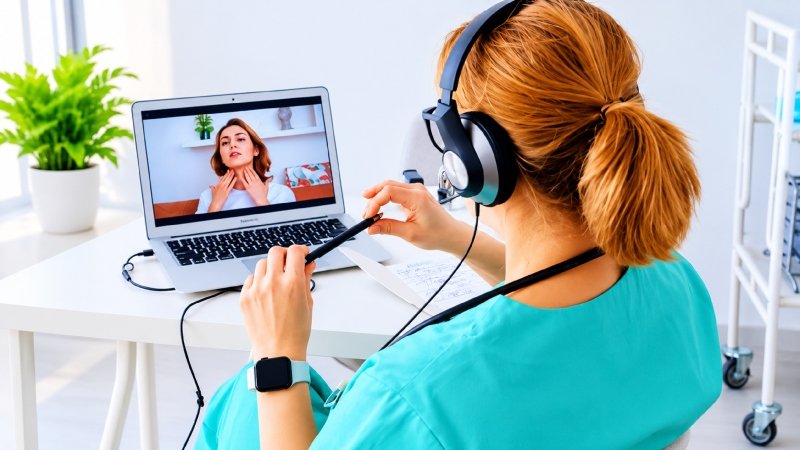
Mental Health Services in Rural Communities: For millions of Americans who don’t live near a major city, finding a therapist isn’t just inconvenient – it can feel almost impossible. Rural mental health care has been underfunded and understaffed for a long time, and that’s before you factor in the cultural piece: in a lot of these communities, asking for help still carries a stigma that urban areas have largely moved past. Virtual care is starting to shift that. And for clinicians who want to reach people beyond their immediate geography, it’s a development worth paying attention to.
This isn’t really a convenience story. It’s more about who gets access to care and who doesn’t – and whether that gap is finally starting to close.
The Current State of Mental Health Access in Rural Areas
The provider shortage in rural areas is severe. Plenty of counties have no licensed psychiatrist at all. Others have a few therapists stretched thin across a population of thousands. If the nearest specialist is two hours away, getting help stops being a simple decision and becomes a logistical problem – one that a lot of people quietly give up on.
Transportation makes it worse. Patients without a reliable car or any public transit option will often skip appointments rather than figure out how to get there, especially when treatment means showing up weekly or every other week. Then you start adding up the other costs: missed work, childcare, gas. At some point, in-person care starts to feel less like a healthcare option and more like something out of reach.
Stigma is its own layer. Small towns are small. People know each other. The thought of being seen walking into a therapist’s office – or running into someone in the waiting room – is enough to stop a lot of people from ever making the call, even when things are bad.
How Virtual Care Is Transforming Mental Health Services
Telehealth has changed the math here in a pretty fundamental way. Someone in rural Montana can now see a psychiatrist based in Denver without leaving their house. That’s not a minor convenience; it opens up a completely different pool of providers and cuts down on wait times that used to stretch for months.
The cost side improves too. Less travel for patients, lower overhead for providers. And privacy – logging on from home means no one sees you going in. For patients who were worried about that, it turns out to matter quite a bit.
The technology has also moved well past just video calls. Messaging-based platforms let patients stay in contact with counselors between sessions. Asynchronous options give both sides flexibility when schedules don’t match up neatly. For clinicians making this transition, telehealth training for counselors has become genuinely important groundwork – learning to read a patient through a screen is a different skill than doing it across a desk.
The Future of Virtual Mental Health Care
Regulation is slowly catching up. Interstate licensure compacts are expanding, which means clinicians can treat patients across state lines without going through the full credentialing process in every jurisdiction. For rural areas – where the nearest qualified provider might be in a different state entirely – that’s a meaningful change.
Broadband access is improving, too, though unevenly. Expansion initiatives are reaching some counties that used to have connections too unreliable for a consistent video session. It’s not solved, but it’s better than it was.
Artificial intelligence is showing up in the workflow as well – symptom tracking, scheduling tools, early screening before a patient ever gets to a clinician. These aren’t replacing the human side of care. But they can reduce friction at intake and free up providers to spend their time where it counts.
Most people working in this space expect hybrid models to become standard: regular virtual check-ins with in-person visits reserved for more complex situations or moments of crisis. It’s a sensible mix – telehealth handles consistency, in-person care handles what it’s still best at.
Moving Forward
Mental Health Services in Rural Communities: Virtual care isn’t a fix for everything rural communities are dealing with. But it’s already doing real work on the access problem. For mental health professionals, keeping up with telehealth best practices and whatever’s coming next isn’t really optional at this point – it’s just part of the job, if the job is actually reaching the people who need you. Clinicians who’ve already made the adjustment are better positioned than those still waiting to see how it shakes out.