Overview
Learning Games FamParentLife focuses on simple and enjoyable ways to help children learn through play. Games can make lessons feel less stressful while encouraging curiosity, creativity, memory, and problem-solving skills. Parents and educators can use age appropriate activities at home, in classrooms, or during family learning time.
The best learning games do not always require expensive toys or digital devices. Simple cards, puzzles, drawing activities, word challenges, and counting games can turn ordinary moments into useful learning experiences. The goal is to create an environment where children can explore ideas while having fun.
What Are Learning Games?
Learning games are activities designed to combine education and play. Instead of asking children to study through repetitive tasks, these games give them a chance to practice useful skills in an enjoyable way.
For example, a counting game can help children understand numbers, while a word-matching activity can improve vocabulary. Puzzle games can also encourage children to think carefully before making a choice.
With Learning Games FamParentLife, parents can choose activities based on a child’s age, interests, and learning needs.
Why Learning Games Matter
Kids can understand new ideas more easily when they take part in the learning process.A good game encourages them to make decisions, try different ideas, and learn from mistakes.
Some key benefits include:
| Learning Area | Possible Benefit |
| Memory | Helps children remember information |
| Problem-solving | Builds logical thinking |
| Language | Improves vocabulary and communication |
| Mathematics | Makes number practice more enjoyable |
| Creativity | Encourages imagination and new ideas |
| Social Skills | Teaches sharing and cooperation |
Games can also help parents spend meaningful time with their children. A short activity can become both a learning opportunity and a positive family experience.
Types of Learning Games for Children
Word and Language Games
Word games can support reading and communication skills. Parents can try spelling challenges, word matching, simple riddles, or storytelling games.
You can also give children a group of letters and ask them to create as many words as possible.Parents can easily modify the activity to suit a child’s learning level and age.
Math Learning Games
Math can be fun, simple, and easy to enjoy.Counting objects, number puzzles, simple card games, and basic addition challenges can make mathematics more interactive.
Parents can use household objects such as buttons, blocks, or coins for simple counting activities.
Puzzle Games
Puzzles encourage children to observe details and find solutions. Jigsaw puzzles, pattern games, and matching activities can support concentration and logical thinking.
Start with simple challenges and slowly increase the difficulty as the child becomes more confident.
Memory Games
Memory games are easy to organize at home. Place several objects on a table and let the child observe them for a short time. Then remove one object and ask the child to identify what changed.
This simple activity can encourage observation and recall.
Learning Games Without Screens
Digital games can have educational value, but children can also learn through screen-free activities. These games encourage physical interaction and direct communication.
Parents can try:
- Drawing and guessing games
- Building block challenges
- Flashcard activities
- Treasure hunts
- Matching games
- Story building challenges
- Counting races
- Shape identification games
These activities require little preparation and can be changed according to the child’s interests.
How Parents Can Make Games More Effective
The best learning games should match the child’s ability. An activity that is too easy may become boring, while one that is too difficult can cause frustration.
Parents should keep instructions simple and allow children to experiment.Value the child’s effort, not just the final answer.This can help children develop confidence and a positive attitude toward learning.
It is also useful to keep activities short. Young children may learn more effectively through several brief sessions than through one long activity.
Learning Games at Home
Home can become a useful learning space with a little creativity. A kitchen can become a place for counting and measuring. A living room can support sorting, matching, or memory games. Even a family walk can become a learning activity.
Parents can ask children to identify colors, shapes, numbers, plants, or objects around them. These small challenges can turn everyday experiences into educational moments.
Learning Through Family Play
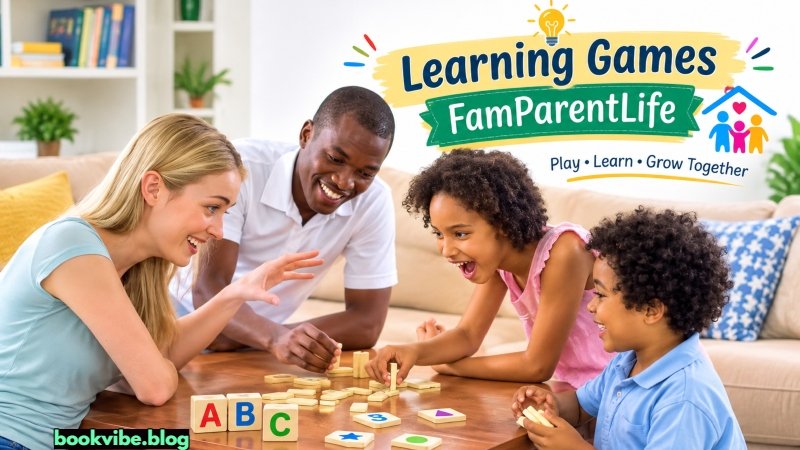
One of the strongest ideas behind Learning Games FamParentLife is combining learning with family interaction. When parents participate, children can receive encouragement while developing communication and social skills.
Family games can also teach important habits such as taking turns, following rules, listening carefully, and accepting mistakes.Children can use these abilities in school as well as in everyday situations.
Choosing the Right Learning Game
Consider these points before selecting an activity:
Pick a game that fits the child’s age.
Match the activity with a useful learning goal.
Keep instructions easy to understand.
Select games that encourage active participation.
Adjust the difficulty when needed.
Make room for creativity and independent thinking.
Keep the activity simple and easy to follow. A simple game can be highly effective when children are interested and involved.
Final Thoughts:
Learning Games FamParentLife brings a fun approach to children’s education by combining play with useful skills. Simple games can help children improve memory, language, counting, creativity, focus, and problem-solving. Parents can choose activities that match their child’s age and interests. Even basic puzzles, word games, matching challenges, and counting tasks can turn learning into an enjoyable experience at home.
The real value of Learning Games FamParentLife is the chance to learn together as a family. Parents can encourage children, celebrate their effort, and make each activity enjoyable. With regular practice, playful learning can build confidence and make children more interested in discovering new ideas. Visit Active Learning Activities FamParentLife for more details.