Overview
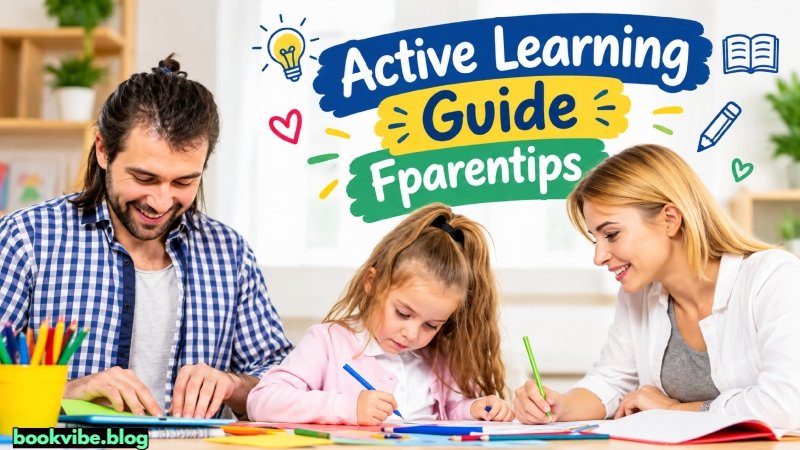
The active learning guide fparentips approach focuses on making learning more interactive, practical, and enjoyable for children. Instead of asking children to simply memorize information, active learning gives them opportunities to explore ideas, ask questions, solve problems, discuss topics, and apply what they discover.
Learning can happen anywhere. A kitchen, garden, classroom, playground, or living room can become a place for discovery. Parents can use ordinary activities to encourage curiosity and help children connect new information with real experiences.
The goal is not to make every moment a formal lesson. It is to create opportunities for children to participate in learning and gradually become more confident, thoughtful, and independent learners.
What Is Active Learning?
Active learning is a learning approach in which students participate directly in the learning process. They may discuss an idea, solve a problem, practice a skill, investigate a question, or reflect on what they have learned.
For children, active learning can be especially natural through play and hands on activities. It does not always require physical movement. A child thinking carefully about a question, explaining an answer, or comparing two ideas can also be actively learning.
Why Active Learning Is Valuable
When children participate in learning, they have more opportunities to connect new information with what they already know. They can test ideas, recognize mistakes, and make changes based on what they discover.
Some important areas that active learning can support include:
| Learning Area | Example of Active Practice |
| Problem-solving | Finding a way to complete a challenge |
| Creativity | Designing, drawing, building, or inventing |
| Communication | Explaining an idea to another person |
| Observation | Noticing patterns, changes, or details |
| Critical thinking | Comparing ideas and deciding between options |
| Independence | Choosing an activity and evaluating progress |
Active learning can also encourage children to reflect on what they understand and where they need more practice.
Make Everyday Activities Educational
Parents do not need special equipment to introduce active learning. Everyday tasks can provide simple learning opportunities.
Cooking Together
Cooking can introduce counting, measuring, sequencing, and observation. Let children participate in age-appropriate tasks and talk about what is happening.
For example, you might ask what could happen if an ingredient is increased or decreased. This turns an ordinary activity into a chance to think and make predictions.
Exploring Outdoors
Outdoor time can encourage observation and curiosity. Children can look at leaves, notice weather patterns, identify different sounds, or compare natural objects.
Instead of explaining everything immediately, allow children to describe what they see and develop their own questions.
Building and Creating
Simple building activities can encourage planning and problem solving. Children can create structures with blocks, paper, cardboard, or other safe materials.
If something does not work, encourage them to consider what they could change rather than immediately providing the solution.
Ask Better Questions
Questions are an important part of active learning. Open ended questions can encourage children to explain their thinking instead of simply giving a one word answer.
Useful prompts include:
- What do you notice?
- What do you think will happen?
- Why do you think that happened?
- What could you change?
- Can you think of another way?
- How would you explain this to someone else?
These questions can make children more involved in the learning process.
Let Children Solve Problems
Parents naturally want to help when a child faces a difficult task. However, giving the answer immediately can remove an opportunity to think.
Instead, offer a small clue or ask another question. Give the child enough time to try, reconsider, and attempt another solution.
This does not mean leaving children without support. Effective guidance means helping when needed while still allowing them to do the thinking themselves.
Use Reading as an Active Experience
Reading does not have to be passive. Parents can pause during a story and ask children to predict what might happen next or explain why a character made a particular choice.
After reading, children can draw a scene, retell the story in their own words, or connect the story to something they already know.
These simple activities encourage comprehension and reflection.
Create a Positive Learning Environment
Children are more likely to participate when they feel comfortable making mistakes. Parents can create a supportive environment by praising effort, listening to ideas, and treating questions as valuable.
Avoid turning every activity into a test. Sometimes exploration is valuable even when there is no single correct answer.
A good learning environment gives children room to experiment, reflect, and try again.
Parents as Learning Partners
The active learning guide fparentips concept is not about parents becoming teachers for every moment of the day. Instead, parents can act as learning partners who encourage curiosity and provide suitable opportunities.
Sometimes the best response to a difficult question is, Let’s investigate it together. This shows children that adults can also be curious and that learning is an ongoing process.
Simple Ways to Start Active Learning
You can begin with small changes:
Ask one open ended question during an everyday activity.
Give children time to think before offering an answer.
Encourage them to explain how they reached a solution.
Turn ordinary tasks into small discovery activities.
Let them make appropriate choices about activities.
Discuss what worked and what could be changed.
You do not need a complicated schedule. Consistent small opportunities can make learning more interactive.
Final Thoughts:
The active learning guide fparentips approach encourages children to become participants in their own learning. Through questions, exploration, discussion, creativity, and problem solving, children can build useful skills while enjoying everyday experiences.
Parents can support this process without expensive resources or complicated lessons. A simple conversation, building activity, story, cooking task, or outdoor observation can become a valuable learning opportunity.
The most important step is to give children space to think, try, make reasonable mistakes, and discover. With patient guidance and encouragement, active learning can become a natural part of family life. Visit for more details, Click here