Overview
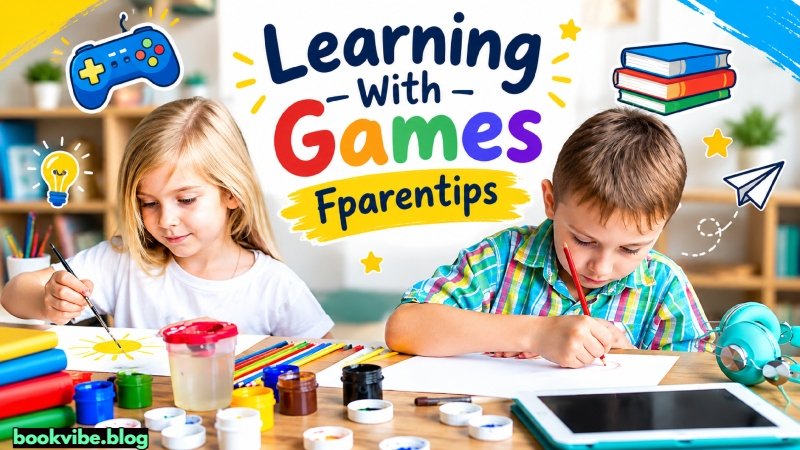
Learning with games fparentips is a simple approach that combines education with fun activities. Games can make lessons more enjoyable while helping children practice important skills in a relaxed way. Instead of depending only on traditional learning methods, parents and educators can use age appropriate games to encourage curiosity, creativity, problem solving, and communication.
The idea is not simply to keep children entertained. Well designed learning games can turn everyday practice into an active experience. When children participate, make choices, solve challenges, and receive feedback, they can become more interested in what they are learning.
What Is Learning With Games Fparentips?
Learning with games fparentips focuses on using games as a useful part of a child’s learning routine. These games can include board games, puzzles, matching activities, word games, memory challenges, educational apps, and simple activities created at home.
The best activities connect play with a clear learning goal. For example, a number game can help children practice basic mathematics, while a word game can improve vocabulary and spelling. This makes learning feel less like a task and more like an enjoyable challenge.
Why Games Can Support Children’s Learning
Games provide opportunities for children to learn through action. Rather than only listening to information, children can experiment, make decisions, and try again when something does not work.
Some common benefits include:
- Better concentration during activities
- More interest in learning
- Improved problem solving skills
- Stronger memory and recall
- Greater creativity
- Practice with communication and teamwork
- More confidence when completing challenges
Games can also provide immediate feedback. When a child discovers an answer or corrects a mistake, the experience can help them understand the lesson more naturally.
Useful Learning Games for Different Skills
Parents can choose games according to the skill they want to develop. There is no need for expensive educational products. Many effective activities can be created with simple materials already available at home.
| Learning Skill | Game Ideas | Main Benefit |
| Mathematics | Number puzzles, counting games | Builds number skills |
| Reading | Word matching, story games | Develops vocabulary |
| Memory | Matching cards, recall games | Supports memory |
| Creativity | Drawing challenges, building games | Encourages imagination |
| Problem-solving | Puzzles, strategy games | Develops logical thinking |
| Communication | Team games, storytelling | Improves expression |
How Parents Can Make Games More Educational
Parents can make a major difference by connecting games to everyday learning. Before starting an activity, decide what the child should practice. The goal might be counting, reading, identifying colors, remembering information, or solving problems.
Keep instructions simple and allow children to explore. Don’t make every game feel like a test or an exam.If children feel too much pressure to win or give perfect answers, the activity may become less enjoyable.
It is also helpful to ask questions during play. For example, parents can ask why a child selected a particular answer or what they might try next. These small conversations can encourage children to think more deeply.
Keep Learning Fun and Age Appropriate
Not every game is suitable for every child. Younger children may benefit from simple matching, sorting, counting, and picture based activities. Older children may enjoy strategy games, quizzes, puzzles, creative challenges, and educational digital games.
The difficulty should be appropriate. A game that is far too easy may become boring, while an extremely difficult game can cause frustration. A balanced challenge keeps children interested and encourages them to continue learning.
Balance Games With Other Learning Activities
Games can be valuable, but they should not replace every other form of learning. Children also benefit from reading books, writing, practical activities, conversations, outdoor play, and hands on projects.
Parents can create a balanced routine by using games as one part of learning. Even a short game can be useful when it has a clear purpose and encourages active participation.
For digital games, parents should also pay attention to age suitability, privacy, screen habits, and the quality of the educational content. Choosing purposeful activities is more important than simply increasing screen time.
Practical Tips for Better Results
A few simple habits can make learning with games fparentips more effective:
Choose a clear goal: Know which skill the game is designed to practice.
Let children participate: Give them opportunities to make decisions and solve problems.
Use positive encouragement: Praise effort, progress, and creative thinking.
Change activities regularly: Different games can develop different skills.
Keep sessions manageable: Short, enjoyable activities can be more effective than long sessions.
Connect games to real life: Use counting, reading, planning, and problem solving during everyday activities.
Final Thought:
Learning with games fparentips provides a simple and enjoyable way to make education more engaging for children. By using puzzles, word games, counting activities, memory challenges, and creative tasks, parents can help children develop useful skills while keeping them interested in learning. Games encourage children to think, explore, solve problems, and learn from mistakes without making every activity feel like a formal lesson.
The key is to choose age appropriate games and connect them with clear learning goals. With the right balance, learning with games fparentips can support creativity, confidence, communication, memory, and problem solving skills in everyday learning. Visit Active Learning Fparentips for more details.