Overview
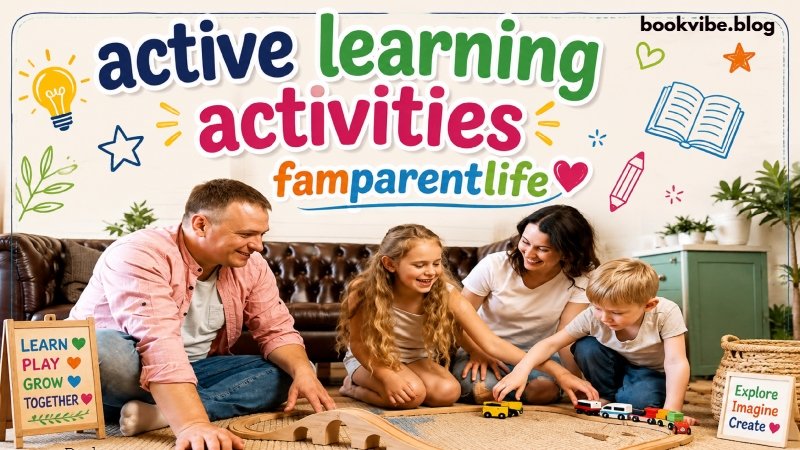
Active learning activities FamParentLife can help children learn through doing, exploring, moving, and sharing ideas. Instead of asking children to only read or listen, these activities give them a chance to take part in the learning process. They can turn simple lessons into enjoyable experiences at home or in the classroom.
Active learning can include games, small projects, drawing tasks, simple experiments, role play, puzzles, and group challenges. These methods can also help children build confidence, creativity, communication, and problem solving skills. Research on active learning shows that students benefit when they explain ideas, connect new knowledge with what they already know, and apply lessons in practical ways.
What Are Active Learning Activities?
Active learning activities are tasks that ask children to participate instead of simply receiving information. A child may solve a problem, create something, answer questions, act out a story, or explore an everyday object.
For example, parents can teach counting with household items. A science lesson can include planting seeds and watching them grow. Reading can become more engaging when children act out scenes from a story. These simple tasks connect lessons with real experiences.
Why Active Learning Matters
Children often understand ideas better when they get a chance to use them. Active learning encourages students to think, discuss, create, and make choices. It can also support motivation and classroom participation.
Movement can also be part of learning. Short physical activities may help children stay focused and engaged during lessons. Research on classroom physical activity has linked movement with better concentration, motivation, behavior, and academic performance.
Easy Active Learning Ideas for Children
| Activity | What Children Practice |
| Number Hunt | Counting and basic math |
| Story Role Play | Reading and communication |
| Nature Walk | Observation and science |
| Building Challenge | Creativity and problem solving |
| Word Cards | Vocabulary and spelling |
| Simple Cooking Math | Measuring and numbers |
| Drawing a Lesson | Memory and understanding |
| Question Game | Thinking and speaking |
These activities do not need expensive materials. Parents can use paper, pencils, toys, boxes, books, or safe household objects.
Learning Through Games
Games can make lessons feel less like a routine task. Parents can create a simple question game where children move forward after answering correctly. Word matching, number puzzles, memory games, and sorting challenges can also support learning.
The key is to keep the game suitable for the child’s age and learning level. A short activity with clear instructions is often easier to enjoy than a complicated task.
Creative Activities at Home
Creativity gives children room to show what they understand. Ask a child to draw a picture about a story, build a model from safe materials, or create a small poster about a school topic.
Parents can also ask children to explain their work afterward. This extra step encourages them to put their thoughts into words and can reveal how well they understand the subject.
Outdoor Learning Ideas
Children can learn in many places, not just at school.A short walk can become a useful lesson. Children can count trees, identify shapes, compare leaves, observe insects, or record changes in the weather.
Outdoor activities can combine movement with education. Play-based learning can also support physical, social, emotional, and thinking skills in young children.
How Parents Can Make Activities Better
Parents do not need to plan a long lesson every day. Start with one simple activity and allow the child enough time to explore it.
Try these simple tips:
- Choose activities that match the child’s age.
- Use everyday objects when possible.
- Let children ask questions.
- Give them time to find answers.
- Praise effort instead of only correct results.
- Allow children to explain what they discovered.
- Change activities when the child loses interest.
The goal is not to make every activity perfect. The goal is to create opportunities for children to think and participate.
Benefits of Active Learning Activities FamParentLife
Active learning activities FamParentLife can bring learning into everyday family life. Children may become more involved when lessons connect with things they already enjoy.
Regular activity-based learning can support several useful skills:
- Better participation
- Creative thinking
- Problem-solving
- Communication
- Confidence
- Memory and understanding
- Teamwork
- Curiosity
Recent research on activity-based learning among primary students also reported improvements in participation, confidence, communication, motivation, and academic achievement.
Final Thoughts:
Active learning activities FamParentLife can make daily learning more enjoyable for children. Simple games, creative tasks, outdoor exploration, and hands-on projects can help children understand new ideas in a natural way. Parents can use common items at home to create useful learning moments without making lessons feel difficult or boring.
The best part of active learning activities FamParentLife is that children can learn while taking part. These activities can support curiosity, confidence, communication, and problem-solving skills. With small, regular activities, parents can create a positive learning routine that keeps children interested and ready to discover something new.
of only listening, they have more chances to explore ideas, practice skills, and enjoy the learning process. For more details, Click here